
St. Pete Location
Bradenton Location
Save your Spot for My Skin St Pete's
BOO-tox Party | October 23
Patient Education
We're passionate about helping people achieve their healthiest, happiest skin. Whether you're struggling with acne, eczema, rosacea, or any other skin concern, we're here to offer support, information, and inspiration.
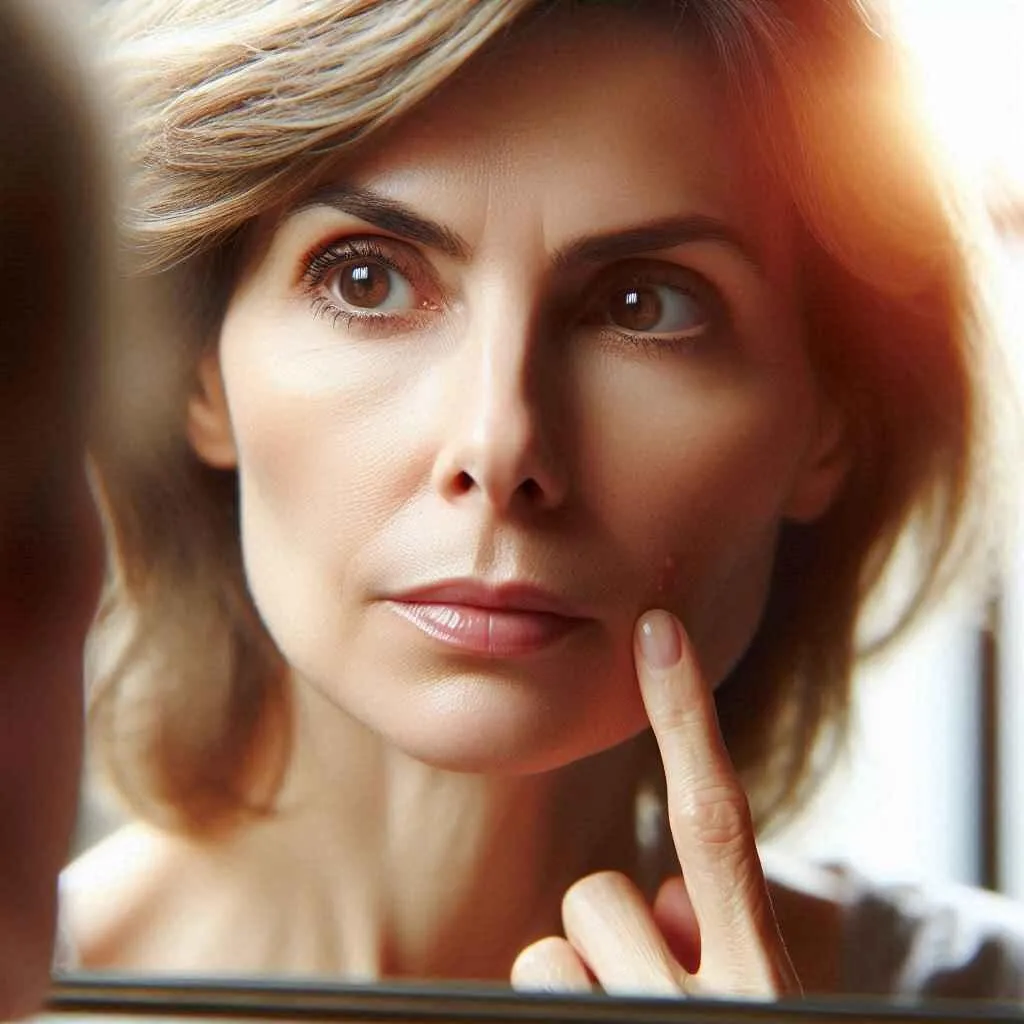
Age Spots: Causes, Prevention, and Effective Treatments
Age Spots: Causes, Prevention, and Effective Treatments
Quick answer: Age spots, also called sun spots or liver spots, are flat brown or tan patches caused by years of sun exposure building up pigment in the skin. They're harmless, but they can look similar to early skin cancer, so it's worth knowing what makes a spot a true age spot versus something that needs a provider to look at it.
Most of us start noticing these spots on the hands, face, shoulders, and chest sometime in our 40s or 50s, though they can show up earlier depending on how much sun exposure someone has had over the years. They're extremely common and almost always harmless, but the fact that they look a lot like other, more serious skin changes is exactly why they're worth understanding.
Understanding Age Spots
What Are Age Spots?
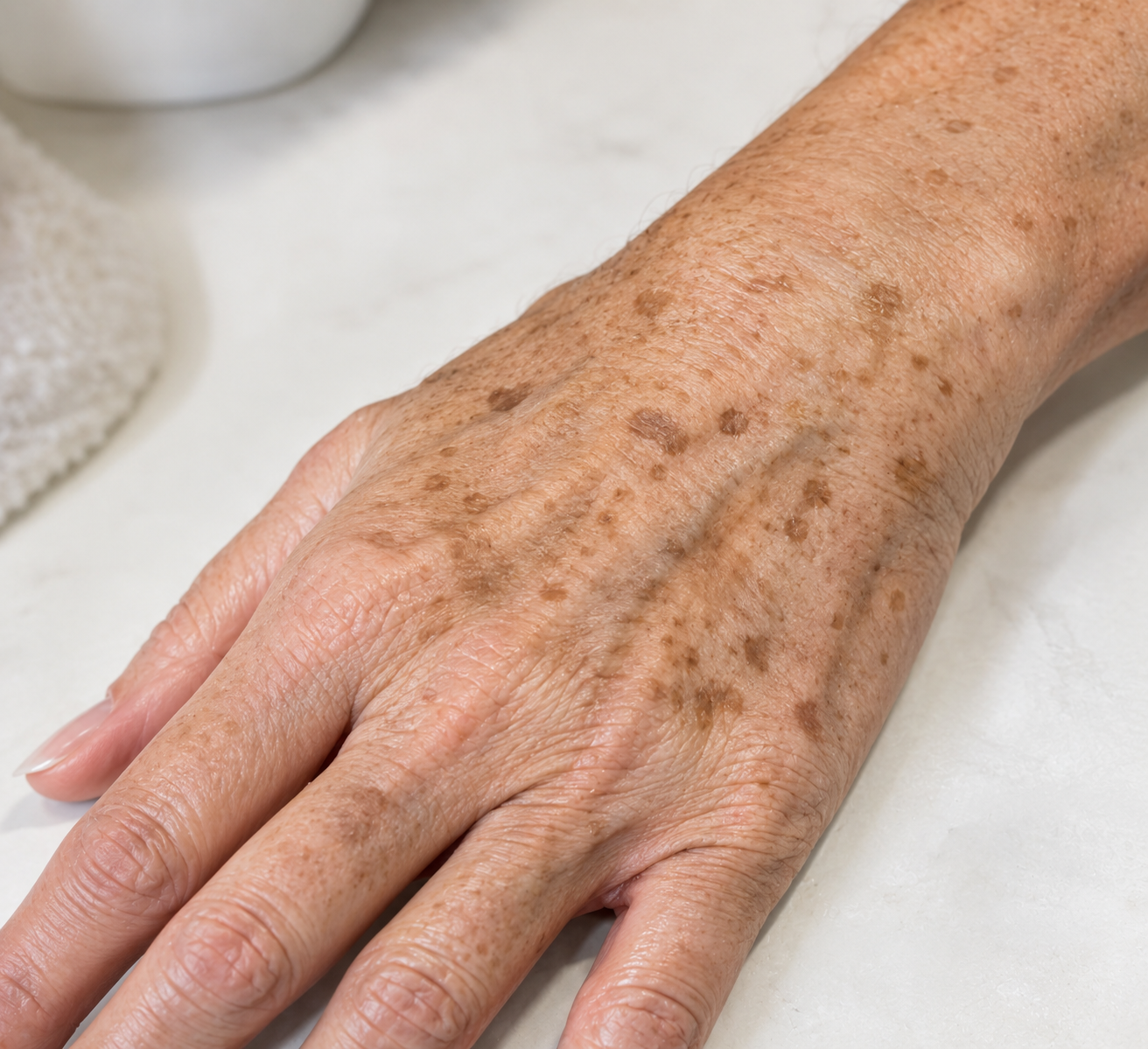
Age spots are flat, oval patches of darker pigmentation that range from light brown to black. They form when melanin, the pigment that gives skin its color, clumps together in higher concentrations after years of sun exposure. They're most common on the parts of the body that get the most sun over a lifetime: the backs of the hands, the face, the shoulders, and the upper back.
They go by a few different names, including sun spots, liver spots, and the clinical term solar lentigines, but they have nothing to do with the liver. That name is just an old myth that stuck around.
Causes of Age Spots
Cumulative sun exposure. This is the biggest factor by far. Years of UV exposure, even without ever getting a serious sunburn, gradually trains certain skin cells to overproduce pigment in small clusters.
Age. Skin's ability to repair UV damage slows down over time, which is part of why these spots tend to show up more after age 40.
Genetics and skin tone. Fair skin tends to show sun damage as visible spots more easily, though anyone can develop them.
Tanning beds. Indoor tanning adds concentrated UV exposure on top of whatever sun exposure someone already gets outdoors.
Prevention Strategies
Sun Protection
Daily sunscreen is the single most effective thing anyone can do to prevent new age spots and keep existing ones from getting darker. A broad spectrum SPF 30 or higher, reapplied every two hours during extended sun exposure, along with hats and shade during peak hours, makes a real difference over time.
Antioxidant Rich Diet
Foods high in antioxidants, like berries, leafy greens, and foods rich in vitamin C, help the skin defend itself against some of the oxidative stress that comes from UV exposure. This isn't a substitute for sunscreen, but it supports overall skin health.
Skincare Routine
A consistent routine that includes antioxidant serums, like vitamin C, along with gentle exfoliation, can help keep skin more resilient and even toned over time.
Effective Treatments for Age Spots
Topical Treatments
Prescription strength hydroquinone, retinoids, and other brightening ingredients can gradually fade age spots over several months of consistent use. Results take patience, but topical treatment is often the first step before considering an in office procedure.
Professional Treatments
For faster or more noticeable results, in office treatments tend to outperform topical products alone. These include chemical peels, which remove the outer layer of pigmented skin, and laser and light based treatments, which target pigment directly and are usually done in a series.
Emerging Treatments and Research
Newer approaches, including certain laser wavelengths and combination protocols, continue to be studied for treating stubborn pigmentation with less downtime. Research in this area is ongoing, and treatment options continue to improve.
Is It Really an Age Spot? Warning Signs to Watch For
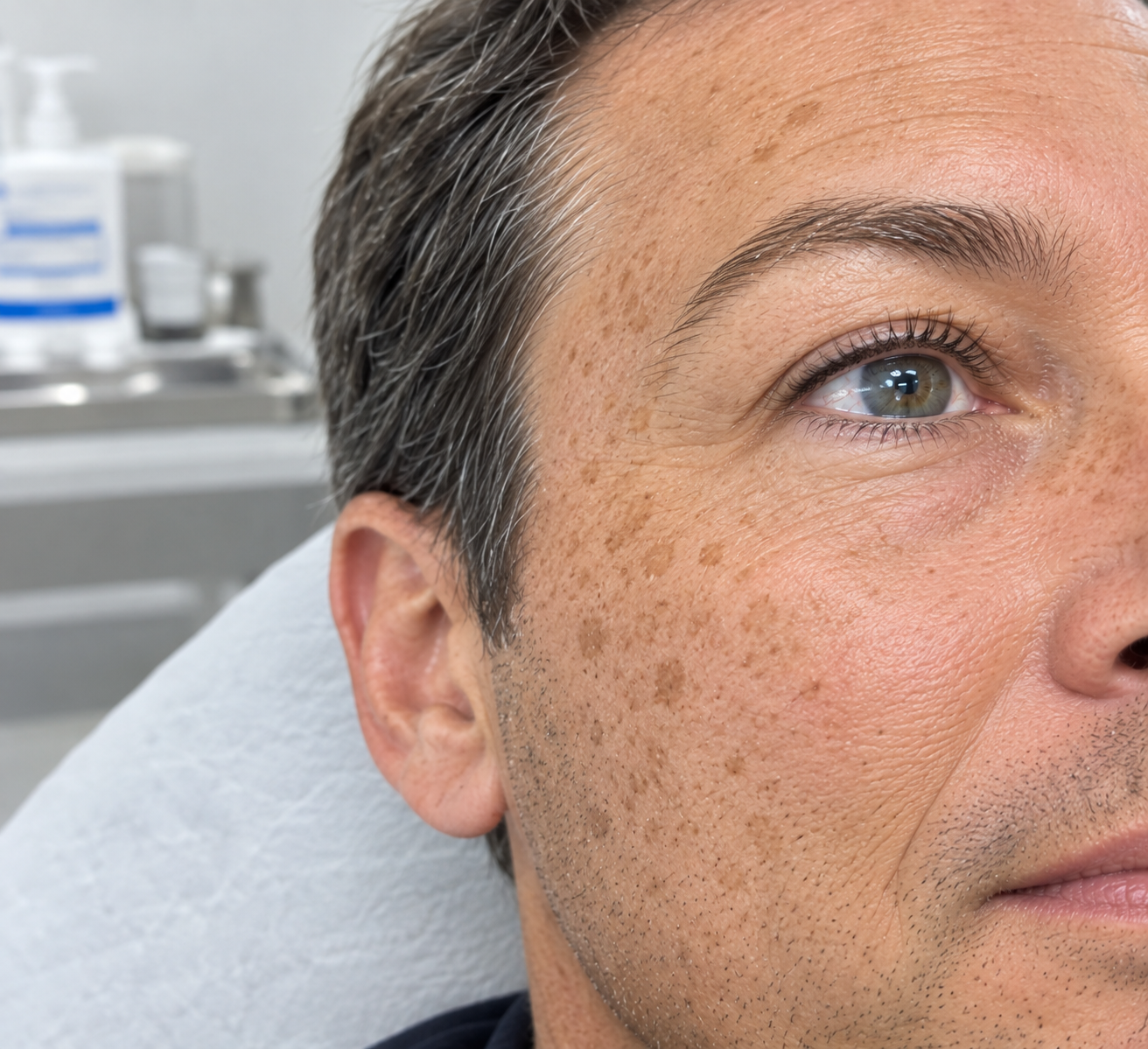
Most brown spots that show up after years in the sun are exactly what they appear to be. But because age spots and early skin cancer can both show up as a flat, discolored patch, it's worth knowing what separates a normal age spot from something that deserves a closer look. The same ABCDE guidelines dermatology providers use to evaluate moles apply here too.
Asymmetry. A true age spot is usually round or oval and fairly even in shape. A spo
t where one half looks noticeably different from the other is worth having checked.
Border. Age spots typically have a smooth, well defined edge. A blurry, ragged, or notched border is a signal to get evaluated.
Color. A single, consistent shade of brown is typical of an age spot. Multiple colors within one spot, including black, red, white, or blue, is not.
Diameter. Age spots are usually smaller than a pencil eraser. A spot larger than that, or one that keeps growing, deserves attention.
Evolving. This is the biggest one. A true age spot looks about the same for years. Any spot that changes size, shape, color, or texture, or that starts to itch, bleed, or scab over, should be evaluated by a provider, regardless of how it scores on the other four points.
If a spot checks any of these boxes, that doesn't automatically mean it's serious, but it does mean it's worth having a provider take a look rather than assuming it's just sun damage. You can read more about how that evaluation works on My Skin's skin cancer examination page.
Professional Treatment Options at My Skin
Leah Michel, APRN, FNP-BC is a board certified nurse practitioner and master aesthetic injector who evaluates pigmented spots before recommending any cosmetic treatment for them. That evaluation matters, since treating a spot cosmetically before confirming what it actually is can delay a diagnosis that needs attention. My Skin offers a full full body skin exam for patients who want their spots checked thoroughly, along with cosmetic treatment options for spots confirmed to be ordinary sun damage.
Frequently Asked Questions
Can an age spot turn into skin cancer?
A true age spot does not turn into skin cancer. The concern is usually the opposite: an early skin cancer can be mistaken for an age spot because both can look like a flat brown patch. That's why any spot that's changing is worth having checked.
How can I tell if my spot is an age spot or something more serious?
Look at whether it's stayed the same size, shape, and color for a long time. Age spots are stable. Anything that's changing, has an irregular border, or contains more than one color is worth having a provider evaluate.
Do age spots go away on their own?
No. Age spots don't fade without treatment, though consistent sun protection can keep them from getting darker or more numerous.
For general information on evaluating skin spots and changes, the American Academy of Dermatology offers additional guidance on what to look for and when to see a provider.
This blog is for educational purposes only and is not a substitute for professional medical advice. Individual results vary. Always consult a licensed medical provider to evaluate any changing or concerning skin spot.

If you have any questions or concerns about your skin & would like to schedule an appointment at our St. Pete dermatology office or Brandenton dermatology office, please call us today!
St. Pete Location
111 2nd Ave NE., Suite 1406
St Petersburg, FL 33701
Plaza Tower- Downtown St Pete
Phone: (727) 295-7223
Bradenton Location



Mail
Facebook
LinkedIn
X