
St. Pete Location
Bradenton Location
Patient Education
We're passionate about helping people achieve their healthiest, happiest skin. Whether you're struggling with acne, eczema, rosacea, or any other skin concern, we're here to offer support, information, and inspiration.
Skin Sarcoidosis: Symptoms, Causes & Treatment | My Skin
Skin Sarcoidosis: Symptoms, Causes & Treatment Options
If you've noticed unusual raised bumps, reddish patches, or scar-like skin changes that won't go away, you may be dealing with more than a routine rash. Skin sarcoidosis — also called cutaneous sarcoidosis — is a manifestation of a broader inflammatory condition that can affect the skin, lungs, lymph nodes, and other organs. Because it often looks like other common skin conditions, it's frequently misdiagnosed or overlooked.
At My Skin, Leah Michel, APRN, FNP-BC, evaluates patients in both St. Petersburg and Bradenton, Florida for chronic and unexplained skin changes, including cutaneous sarcoidosis, as part of her medical dermatology practice.
What Is Skin Sarcoidosis?
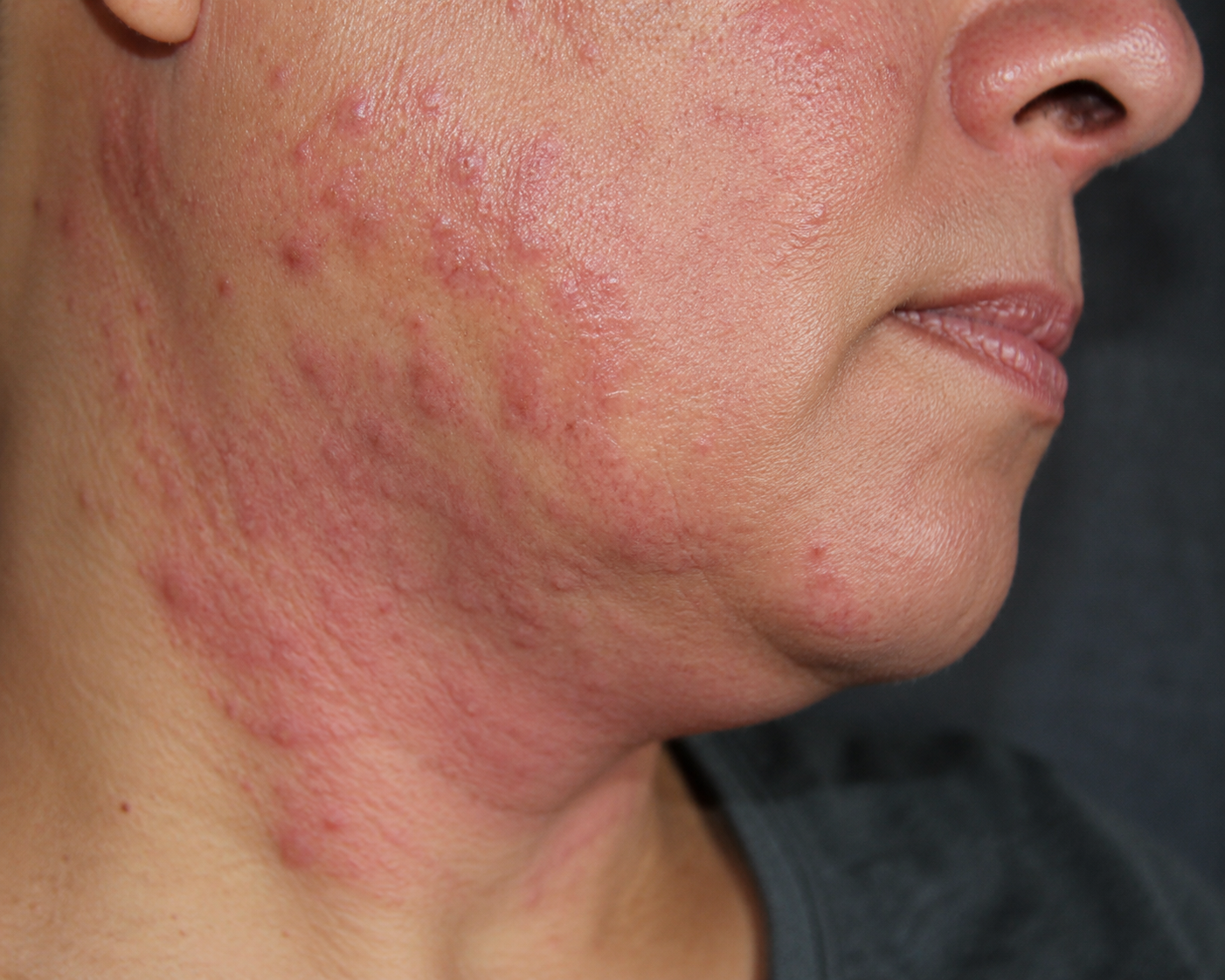
Sarcoidosis is a condition in which the immune system forms small clusters of inflammatory cells, called granulomas, in various tissues throughout the body. When these granulomas develop in the skin, it's referred to as cutaneous or skin sarcoidosis. Skin involvement occurs in roughly one in four people diagnosed with sarcoidosis, and for some, it's the first visible sign that leads to a broader diagnosis.
Skin sarcoidosis can appear on its own, without any other organs being affected, or alongside lung, eye, or lymph node involvement, which is the more common presentation of systemic sarcoidosis.
Common Symptoms & What Skin Sarcoidosis Looks Like
Cutaneous sarcoidosis can take several different forms, which is part of why it's so often mistaken for other conditions:
Small, firm, reddish-brown or purple bumps (papules), often on the face, especially around the nose, eyelids, and lips
Larger raised plaques with a scaly or thickened texture, sometimes on the scalp, back, or limbs
Lupus pernio — violet, swollen patches typically affecting the nose, cheeks, and ears
Nodules under the skin, especially on the arms or legs
Scar sarcoidosis — new inflammation or discoloration developing within old scars or tattoos
Erythema nodosum — tender, red nodules usually on the shins, which can appear early in the disease
Lesions can be itchy, tender, or entirely painless, and their appearance can change over time. Because of this variability, a proper evaluation is important rather than relying on appearance alone.
What Causes Skin Sarcoidosis?
The exact cause of sarcoidosis isn't fully understood. Researchers believe it results from an abnormal immune response, possibly triggered by exposure to certain environmental substances, infections, or inhaled particles in someone who is genetically predisposed. It is not contagious and cannot be spread from person to person.
Some factors associated with a higher likelihood of developing sarcoidosis include:
Family history of sarcoidosis
Age between 20 and 50
Certain occupational or environmental exposures
Being of African American or Northern European descent, in whom rates tend to run higher
How Skin Sarcoidosis Is Diagnosed
Because cutaneous sarcoidosis can resemble conditions such as granuloma annulare, lupus, rosacea, or even certain skin cancers, an accurate diagnosis typically requires a hands-on skin exam and often a skin biopsy. During a visit at your dermatology provider, they will perform a thorough physical exam of the affected areas and, when needed, takes a small tissue sample to confirm the presence of granulomas under the microscope.
If skin sarcoidosis is confirmed or suspected, additional testing — such as a chest X-ray, bloodwork, or referral to pulmonology or ophthalmology — may be recommended to check whether other organs are involved, since skin findings can be the first clue to systemic disease.
Treatment Options for Skin Sarcoidosis
Treatment is tailored to the extent of skin involvement, the location of lesions, and whether other organs are affected. Options may include:
Topical or injected corticosteroids to calm inflammation in localized lesions
Oral medications, such as antimalarials or immune-modulating drugs, for more widespread or stubborn cases
Laser treatment to improve the appearance of visible facial lesions
Ongoing monitoring, since sarcoidosis can wax, wane, or resolve on its own over time
Some cases of skin sarcoidosis improve without treatment, while others persist and require long-term management. Regular follow-up allows your provider to adjust the treatment plan as lesions change.
When to See a Dermatology Provider
You should schedule an evaluation if you notice new, persistent bumps or discolored patches that don't resolve within a few weeks, especially if they appear within old scars, change in size or color, or are accompanied by other symptoms like shortness of breath, eye irritation, or fatigue.
Frequently Asked Questions
Is skin sarcoidosis dangerous?
Skin sarcoidosis itself is usually not dangerous, though it can cause visible or cosmetic concerns. It's important to rule it in or out and check for systemic involvement, since sarcoidosis can affect the lungs or other organs in some patients.
Can skin sarcoidosis go away on its own?
Yes, in some people, cutaneous sarcoidosis resolves on its own over months to years. In others, it persists and requires treatment. A provider can help you understand what to expect based on your specific presentation.
Is skin sarcoidosis contagious?
No. Sarcoidosis is not contagious and cannot be transmitted from person to person.
Who should I see for skin sarcoidosis?
A dermatology provider experienced in diagnosing inflammatory and granulomatous skin conditions, like Leah Michel at My Skin, can evaluate your skin and coordinate any additional testing needed.
Related Reading
Medical Disclaimer: This article is for general educational purposes only and is not a substitute for professional medical advice, diagnosis, or treatment. Individual results and presentations vary. Always consult a qualified dermatology provider for an accurate diagnosis and personalized treatment plan.
Leah Michel, APRN, FNP-BC is a Board-Certified Family Nurse Practitioner specializing in medical, surgical, and cosmetic dermatology, seeing patients at My Skin's St. Petersburg and Bradenton, Florida offices.
If you have any questions or concerns about your skin & would like to schedule an appointment at our St. Pete dermatology office or Brandenton dermatology office, please call us today!
St. Pete Location
111 2nd Ave NE., Suite 1406
St Petersburg, FL 33701
Plaza Tower- Downtown St Pete
Phone: (727) 295-7223
Bradenton Location



Mail
Facebook
LinkedIn
X