
Is Hormone Replacement Therapy Reversible?
Is Hormone Replacement Therapy Reversible? What You Need to Know
If you've been considering hormone replacement therapy (HRT) but feel hesitant, one of the most common questions patients ask is: Is hormone replacement therapy reversible? The short answer is yes — but the full picture is a bit more nuanced. Understanding what happens when you stop HRT, what changes are temporary versus permanent, and how to safely discontinue treatment can help you make an informed decision with confidence.
At My Skin in St. Petersburg and Bradenton, Florida, Leah Michel, APRN, FNP-BC specializes in personalized hormone replacement therapy plans designed to give you the benefits of hormonal balance while keeping your long-term wellness goals in mind.
What Is Hormone Replacement Therapy (HRT)?
Hormone replacement therapy is a medical treatment that replenishes hormones — most commonly estrogen, progesterone, and/or testosterone — that the body produces in lower quantities due to aging, menopause, perimenopause, or other hormonal imbalances.
HRT can take many forms, including:
Oral pills or capsules
Transdermal patches or creams
Injections
Pellet therapy (bioidentical hormones inserted under the skin)
At My Skin, we offer bioidentical hormone therapy — hormones that are chemically identical to those your body naturally produces, offering a more personalized and natural approach to hormonal health.
Is Hormone Replacement Therapy Reversible?
Yes — HRT is generally reversible. When you stop taking hormone therapy, your body will gradually return to its pre-treatment hormonal state. However, the experience of stopping HRT varies depending on several factors:
1. Type of HRT Used
Oral and transdermal HRT (pills, patches, creams) typically leave the body within days to weeks once discontinued. Pellet therapy, where hormones are implanted under the skin, releases hormones gradually and may take 3–6 months before effects fully wear off as the pellets dissolve naturally.
2. Duration of Treatment
Patients who have been on HRT for longer periods may notice a more gradual return to baseline. Your body may need time to "relearn" its natural hormone production rhythm, though this varies widely by individual.
3. Your Body's Natural Hormone Levels
If you began HRT because of very low hormone levels (such as during or after menopause), stopping HRT will likely return you to those low levels — meaning symptoms like hot flashes, mood changes, and vaginal dryness may come back.
4. How You Taper Off
Most providers, recommend a gradual tapering of HRT rather than an abrupt stop. This approach helps minimize withdrawal-like symptoms and allows your body to adjust more comfortably.
What Happens When You Stop HRT?
When HRT is discontinued, most patients experience a return of the symptoms that the therapy was originally managing. Common experiences include:
Return of hot flashes and night sweats
Mood fluctuations or increased anxiety/depression
Sleep disturbances or insomnia
Vaginal dryness or discomfort
Decreased libido
Fatigue and brain fog
Joint stiffness or aches
These symptoms are not permanent side effects of HRT, they are simply your body returning to its previous hormonal state. Think of HRT like glasses: when you take them off, your vision returns to what it was before, not worse.
Are There Any Irreversible Effects of HRT?
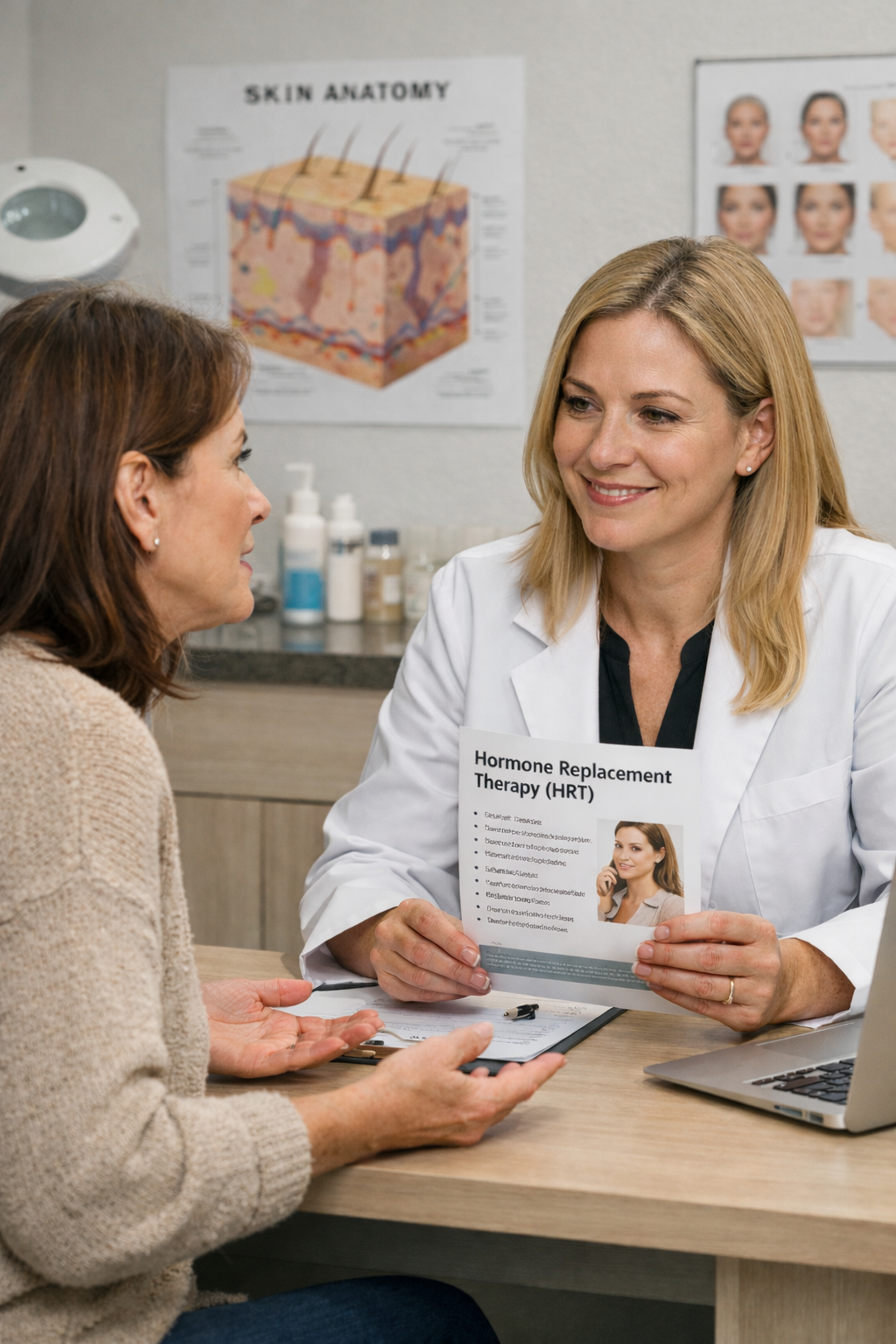
For the vast majority of patients, HRT does not cause permanent or irreversible changes. However, there are a few important considerations:
Bone Density Benefits
One of the most significant benefits of HRT is its protective effect on bone density. When HRT is stopped, the bone-protective effect diminishes over time. Meaning, you may gradually lose the bone density gains made during treatment. This is something to discuss with your provider when planning a discontinuation timeline.
Cardiovascular Considerations
Research suggests that HRT may have cardiovascular benefits when initiated early in menopause. These benefits are not necessarily permanent after stopping, though long-term risks depend heavily on your personal health history.
Skin and Collagen
HRT, especially estrogen, supports collagen production and skin elasticity. Stopping HRT may result in a return to age-related skin changes, which is why many patients at My Skin complement their wellness journey with cosmetic dermatology treatments and medical-grade skincare products to support their skin health from the outside as well.
How to Safely Stop HRT
If you're considering discontinuing hormone replacement therapy, it's essential to work with a knowledgeable provider. Never stop HRT abruptly on your own without medical guidance.
Providers recommend the following approach for patients considering stopping HRT:
Schedule a consultation first. Discuss your reasons for wanting to stop, your current hormone levels, and your overall health goals.
Gradual tapering. Slowly reducing your dose over weeks or months can help minimize symptom rebound and allow your body to adjust.
Lifestyle support. Nutrition, exercise, stress management, and sleep hygiene all play a critical role in supporting hormonal health during and after HRT.
Explore complementary options. For patients who want to manage symptoms without full HRT, alternatives such as low-dose topical treatments or medical weight loss programs may help support overall wellness.
Regular monitoring. Lab work and follow-up appointments ensure your transition is smooth and your body is responding well.
Who Is a Good Candidate for HRT?
HRT is most commonly recommended for individuals experiencing:
Perimenopause or menopause symptoms
Low testosterone (in men and women)
Hormonal imbalances affecting mood, energy, or libido
Premature ovarian insufficiency
Post-surgical menopause (following hysterectomy or oophorectomy)
The decision to start or continue HRT is always individualized. Leah Michel, APRN, FNP-BC evaluates each patient's full medical history, symptoms, and goals before recommending a personalized treatment plan.
HRT at My Skin: A Personalized, Whole-Body Approach
At My Skin in St. Pete and My Skin Bradenton, hormone replacement therapy is part of a broader commitment to whole-body wellness. Leah Michel, APRN, FNP-BC brings expertise in both dermatology and functional medicine. Meaning, she understands that your hormones affect not just how you feel, but how your skin looks, how your body ages, and how you experience everyday life.
Our approach integrates:
Bioidentical hormone therapy for natural hormonal balance
Medical weight loss programs to support metabolic health
Cosmetic dermatology to address skin changes associated with hormonal aging
Medical-grade skincare products to maintain and protect your results
We serve patients across St. Petersburg, Bradenton, and surrounding communities in Florida who are ready to take control of their hormonal health.
Frequently Asked Questions About HRT Reversibility
Can I restart HRT after stopping?
Yes. Many patients stop HRT temporarily or permanently and later choose to restart. This decision should always be made in collaboration with your provider, who will reassess your hormone levels and health status before resuming treatment.
Will my symptoms immediately return when I stop HRT?
Symptoms typically return gradually, not all at once. Tapering off slowly can make this transition much more manageable.
Does stopping HRT increase health risks?
For most patients, stopping HRT does not introduce new health risks — it simply removes the protective effects the therapy was providing. Your provider can help you assess any individual risk factors.
How long does it take for HRT to fully leave my system?
This depends on the form of HRT. Oral and patch-based therapies clear the body within days to a few weeks. Pellet therapy may take 3–6 months as the pellet dissolves.
Ready to Learn More About HRT in St. Pete or Bradenton?
Whether you're considering starting hormone replacement therapy, want to explore your options, or are thinking about discontinuing HRT, the team at My Skin is here to help you navigate the journey with confidence and care.
Leah Michel, APRN, FNP-BC offers personalized consultations at both our St. Petersburg and Bradenton locations — with appointments designed to give you the time and attention you deserve.
Book Your HRT Consultation Today | Request an Appointment → | St. Pete: (727) 295-7223 | Bradenton: (941) 330-5805
My Skin St. Pete: 111 2nd Ave NE., Suite 1406, St. Petersburg, FL 33701
My Skin Bradenton: 4301 32nd St. W., Suite D2, Bradenton, FL 34277
View all services at myskinstpete.com →
This blog is for educational purposes only and does not constitute medical advice, diagnosis, or treatment. Hormone replacement therapy (HRT) must be prescribed and monitored by a qualified healthcare provider based on your individual health history and evaluation. Results vary, and you should not start, stop, or adjust HRT without professional guidance. If you have concerns about hormone imbalance or menopause, schedule a consultation. In case of emergency, call 911 or seek immediate medical care.


